Choosing among commercial fleet leasing companies is a significant business decision. The right provider can simplify vehicle acquisition, control operating costs, reduce administrative work, and help your team keep vehicles productive throughout their lifecycle.
The wrong fit may leave you with unclear contract terms, limited vehicle choices, slow acquisition timelines, or gaps in maintenance and support.
Whether you manage service vans, pickups, trucks, SUVs, or specialized equipment, use this checklist to compare fleet leasing providers in 2026. The goal is not simply to find the lowest monthly payment. It is to identify a partner whose vehicles, services, and processes align with how your business operates.
1. Start With Your Fleet Requirements
Before evaluating car fleet leasing companies, document what your business actually needs. A provider should be able to respond to your operating profile rather than offer a generic package.
Review:
- Fleet size and vehicle mix: List your current vehicles and identify what you expect to add, replace, or remove.
- Usage patterns: Consider annual mileage, routes, terrain, payload, towing, passenger capacity, and typical duty cycles.
- Work requirements: Identify whether vehicles need racks, shelving, service bodies, lifts, cranes, lighting, graphics, or other equipment.
- Replacement timing: Note which vehicles are approaching the end of their useful life and when replacements will be required.
- Growth plans: Consider whether you may expand into new locations, add employees, or increase service capacity.
This information helps you ask consistent questions of every provider. It also makes it easier to determine whether a proposed vehicle is genuinely suited to your work.
2. Verify Vehicle Selection and Acquisition Capabilities
A leasing provider should help you source the right vehicle, not push you toward a limited inventory or predetermined manufacturer.
Ask each company:
- Can you source any make and model?
- Do you have access to factory orders and available inventory?
- How do you manage vehicle shortages or changing production schedules?
- What is the expected acquisition timeline?
- Can you add vehicles during the lease term?
- How are manufacturer rebates, incentives, and volume discounts handled?
Rapid vehicle acquisition can directly support operational continuity. Delays may leave technicians without transportation, interrupt customer service, or require expensive short-term rentals.
Independent sourcing is also important. Manufacturer-agnostic commercial vehicle leasing companies can compare options across brands and vehicle classes. That flexibility may help you select a vehicle based on payload, safety, lifecycle cost, and availability rather than a single manufacturer relationship.
3. Compare Lease Structures and End-of-Term Options
Not every lease is designed for the same business priorities. During your review, make sure you understand the difference between the available structures and how each affects ownership, cash flow, risk, and flexibility.
Two common options include:
Operating vehicle lease
An operating lease is typically designed for businesses that want predictable payments and flexibility without taking ownership of the vehicle at the end of the term. Depending on the provider, the vehicle may be remarketed or held for an agreed lease term.
Capital vehicle lease
A capital lease may be appropriate when your business prefers to build toward ownership. At the end of the term, the vehicle may transfer to your company or be remarketed according to the agreement.
For each option, ask:
- What is the lease term?
- What payment components are included?
- Are there mileage restrictions?
- Are there wear-and-tear clauses?
- What are the early termination provisions?
- Can the lease be extended or restructured?
- What happens to the vehicle at the end of the term?
- How are upfits treated during remarketing or transfer?
Terms may vary by provider and vehicle type. Review the agreement carefully rather than comparing monthly payments alone.
4. Request a Complete Cost Breakdown
Transparent pricing is one of the most important factors when comparing fleet leasing services. Ask providers to separate the major cost categories so you can evaluate the full financial impact.
Your quote should clearly identify:
- Vehicle cost: The acquisition price and any applicable manufacturer programs.
- Lease payment: The amount associated with financing or using the vehicle.
- Upfit cost: Equipment, installation, branding, and related project charges.
- Maintenance cost: Scheduled service, repairs, tires, roadside support, and claims handling.
- Administrative fees: Registration, title, licensing, documentation, and other service charges.
- Technology charges: GPS tracking, telematics, dashcams, software, and data services.
- End-of-term charges: Potential costs related to damage, removal of equipment, or disposition.
Ask whether manufacturer rebates and incentives are passed directly to your business. Also confirm whether the agreement includes hidden fees, mileage penalties, wear-and-tear charges, or unexpected administrative costs.
A provider that is willing to explain every line item gives you a stronger foundation for budgeting and long-term planning.
5. Evaluate Maintenance and Downtime Support
A vehicle that is unavailable cannot support your customers or employees. Maintenance is therefore more than a convenience. It is a key part of fleet performance.
Ask potential commercial fleet leasing companies:
- Who schedules preventive maintenance?
- Who approves repairs?
- Is there a national maintenance network?
- Can your company use preferred local vendors?
- Are tires, wear items, towing, and roadside assistance included?
- How are maintenance claims handled?
- Will you receive complete service records?
- Is there a replacement vehicle process for extended downtime?
Look for a provider that uses preventive maintenance scheduling, service reminders, repair coordination, and cost reporting. These processes can help identify issues earlier, reduce administrative work, and keep vehicles road-ready.
Glesby Marks provides fleet maintenance services that include preventive scheduling, service coordination, claims management, maintenance tracking, and national network support. When comparing providers, look for this same level of structured, ongoing support.
6. Confirm That Upfitting Is Managed From Start to Finish
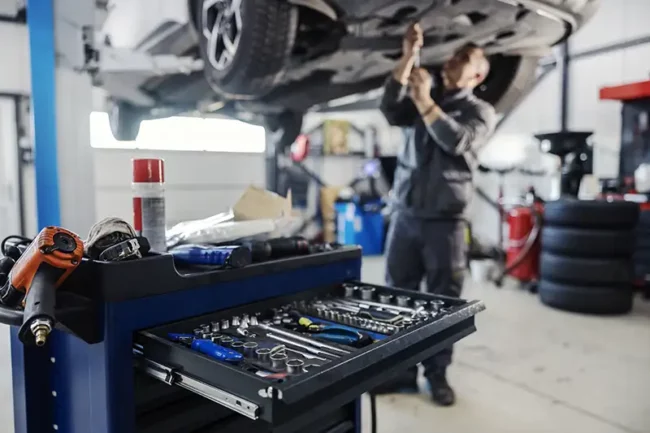
A standard vehicle may not be ready for your operation. Service businesses, contractors, utilities, energy companies, and industrial organizations often require specialized equipment before a vehicle can go to work.
Ask whether the provider can manage:
- Needs assessment and vehicle configuration
- Service bodies and utility bodies
- Racks, shelving, and storage
- Liftgates, cranes, or other specialized equipment
- Safety lighting and accessories
- Tool and equipment organization
- Branding and graphics
- Installation schedules and warranty coordination
The best fleet leasing services treat upfitting as part of the overall vehicle program rather than a separate project for your team to manage.
Clarify who owns the upfit, how it is valued, and what happens to the equipment at the end of the lease. These details can affect your costs and replacement strategy.
Glesby Marks coordinates design, specification, vendor communication, and installation through its fleet vehicle upfitting program. A single point of contact can reduce scheduling issues and help ensure vehicles arrive ready for the work ahead.
7. Review GPS, Telematics, and Data Policies
In 2026, fleet technology should be evaluated alongside the vehicle and lease structure. GPS and telematics can provide insight into location, routes, idle time, driver behavior, asset use, and maintenance needs.
Ask providers:
- What GPS and telematics tools are available?
- Can you monitor vehicles and trailers?
- Does the system provide geofencing and route information?
- Can it support driver safety programs?
- Are dashcams available?
- How are fuel and idle-time trends reported?
- Who owns the data?
- Can you export data if you change providers?
- Does the system integrate with your existing software?
Technology is most useful when it supports practical decisions. For example, route and idle-time data may help reduce waste, while maintenance alerts can support better uptime planning.
Glesby Marks offers fleet GPS and tracking software through its fleet technology program. When comparing car fleet leasing companies, confirm whether technology is fully integrated into your fleet strategy or simply added as a separate product.
8. Assess Service Quality and Communication
A fleet leasing provider becomes part of your operating structure. You should know who will answer questions, resolve issues, and guide decisions throughout the relationship.
Look for:
- A dedicated contact: You should not have to explain your fleet repeatedly to different representatives.
- Responsive communication: Ask how quotes, service requests, and delivery updates are handled.
- Implementation support: Determine whether the provider helps with onboarding, reporting, and technology setup.
- Scalability: Confirm that the program can support new vehicles, locations, and changing needs.
- Industry experience: Ask whether the provider understands businesses similar to yours.
- Lifecycle guidance: Look for support from vehicle selection through replacement and remarketing.
Strong communication reduces friction and helps your business respond more quickly when requirements change.
Red Flags to Watch For
As you compare commercial vehicle leasing companies, be cautious when a provider:
- Offers only a blended price without a detailed breakdown
- Cannot explain mileage, wear, or early termination provisions
- Limits you to one manufacturer without a clear business reason
- Provides vague acquisition timelines
- Treats upfitting as the customer’s responsibility
- Has no clear maintenance escalation process
- Restricts access to your fleet or telematics data
- Cannot provide references from similar businesses
- Avoids explaining end-of-term responsibilities
- Uses a contract that includes unclear or open-ended fees
These issues do not always mean you should immediately reject a provider, but they do justify additional questions and contract review.
How Glesby Marks Fits the Checklist
Glesby Marks has provided custom fleet solutions since 1976 from Houston, Denver, and Seattle. Its manufacturer-agnostic approach is designed to give businesses flexibility across vehicle selection, acquisition, leasing, upfitting, maintenance, technology, and remarketing.
The company’s role extends beyond financing. Glesby Marks acts as a single point of contact across the vehicle lifecycle, helping you configure vehicles, source available inventory, coordinate upfits, manage maintenance, and plan for replacement.
Businesses also receive transparent leasing terms designed around predictable planning. Depending on the selected program, terms may range from 36 to 60 months, with no mileage restrictions, no wear-and-tear clauses, and no hidden costs. Volume buying power from thousands of annual vehicle orders and direct transfer of eligible manufacturer savings can further support cost control.
The right choice will depend on your fleet profile, financial goals, and operational priorities. Use this checklist to compare providers consistently, verify every important term, and select a partner that can support your business from acquisition through remarketing.
When you are ready to review your options, contact Glesby Marks to discuss a fleet program built around your vehicles, your operations, and your plans for growth.
Yoast SEO Fields
- SEO title tag: Fleet Leasing Companies: 2026 Buyer’s Checklist
- Meta description: Compare commercial fleet leasing companies in 2026 with this buyer’s checklist covering costs, lease terms, maintenance, upfitting, technology, and red flags.
- Focus keyword: commercial fleet leasing companies